Enterprise Resource Planning (ERP) systems have undergone significant transformations over the last decade, but 2025 marks a major turning point. Cloud-native ERP platforms—designed and built entirely in the cloud—are becoming the dominant choice for organizations seeking flexibility, real-time insights, and long-term scalability. As businesses face increasing pressure to adapt quickly to market changes, cloud-native ERP emerges as a strategic foundation rather than just a back-office tool.
In this article, we explore the key developments shaping the rise of cloud-native ERP in 2025 and what companies should expect moving forward.
1. Cloud-Native Architecture Becomes the Standard
Unlike traditional ERP systems that are migrated or partially hosted in the cloud, cloud-native ERPs are built using microservices, containerization, and API-driven frameworks.
In 2025, this architecture has become the default choice for new ERP deployments because it offers:
Elastic scalability to handle fluctuating workloads
Faster updates without disrupting operations
Improved performance through distributed computing
Lower infrastructure costs
Companies no longer view cloud migration as optional—it’s now essential for maintaining competitiveness.
2. Faster Deployment and Easier Customization
One of the biggest advantages of cloud-native ERP in 2025 is its rapid deployment capability. Implementation timelines that once took months or even years can now be completed in weeks.
This is possible thanks to:
Pre-built industry templates
Modular microservices
Low-code and no-code configurators
Businesses can personalize workflows, integrate third-party apps, and add new features without expensive custom development. Customization becomes continuous, not a one-time project.
3. AI-Powered Automation at the Core
In 2025, advanced AI tools are deeply integrated into cloud-native ERP systems, enabling intelligent automation across departments. Key improvements include:
Automated financial closing
Predictive demand forecasting
Smart procurement suggestions
AI-assisted HR processes
Real-time anomaly detection
AI has moved from an add-on feature to a core capability, helping organizations reduce human error and dramatically increase efficiency.
4. Enhanced Security Through Zero-Trust and Continuous Monitoring
Security remains a top priority in 2025. Cloud-native ERP vendors adopt zero-trust frameworks, meaning no user or device is trusted by default. Systems continuously verify identity, device health, and access permissions.
Security enhancements include:
End-to-end data encryption
Automated threat detection
Multi-factor authentication (MFA)
Fine-grained access control
Compliance monitoring for GDPR, HIPAA, and ISO standards
These improvements make cloud-native ERP not only more efficient but also more secure than many on-premise systems.
5. Seamless Integration With Ecosystems and Emerging Technologies
In 2025, businesses rely on a variety of digital tools. Cloud-native ERPs are built with integration in mind through APIs and event-driven architectures.
They can easily connect with:
IoT devices for real-time monitoring
eCommerce platforms
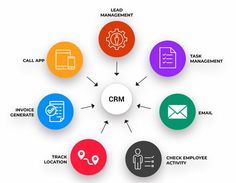
CRM and supply chain systems
Data lakes and analytics platforms
Mobile and wearable devices
This creates a unified data environment where information flows smoothly across the entire organization.
6. Better Support for Remote and Hybrid Work
Remote and hybrid work remain a global norm in 2025. Cloud-native ERP systems are optimized for users working from any location and device. Features include:
Mobile-first interfaces
Real-time dashboards
Role-based accessibility
Secure remote authentication
Browser-based applications with no installations needed
Employees can collaborate and access critical information without being bound to physical offices.
7. Cost-Effective and Future-Proof Investment
Cloud-native ERP eliminates the heavy capital expenditure associated with on-premise systems. Companies pay only for what they use through subscription-based models.
In 2025, organizations appreciate cloud-native ERP for:
Reduced hardware spending
Lower maintenance requirements
Automatic updates without downtime
Long-term scalability
This makes cloud-native ERP a future-proof digital investment for businesses of all sizes.
Conclusion
The rise of cloud-native ERP in 2025 is reshaping how organizations operate, innovate, and grow. With its combination of scalability, AI-driven intelligence, strong security, and seamless integration, cloud-native ERP has become the backbone of modern digital enterprises.
Companies that adopt this technology will be better equipped to navigate uncertainty, optimize their operations, and stay ahead of the competition. As cloud-native ERP continues to evolve, its impact on business transformation will only become more profound.